

How Car Dealers Value Trade-Ins: The Auction Perspective
Understanding how car dealers value trade-ins starts with one question most sellers never think to ask: what would this vehicle bring at auction? That number is where every trade-in appraisal begins, whether the dealer tells you that or not. At McFarland Chevrolet in Maysville, KY, we buy vehicles at auction regularly. Caleb McFarland learned auction buying alongside his father and grandfather. We understand exactly how wholesale market values work because we live in that market. This post pulls back the curtain on the process so you know what is actually happening when a dealer walks around your vehicle.
The Auction Floor Price Is the Starting Point for Every Trade-In Offer
Every dealer who takes in a trade-in is asking one question before they name a number: if we cannot sell this vehicle on our own lot, what would it bring at the wholesale auction? That answer is the floor of any offer a dealer can make.
What the wholesale auction actually is
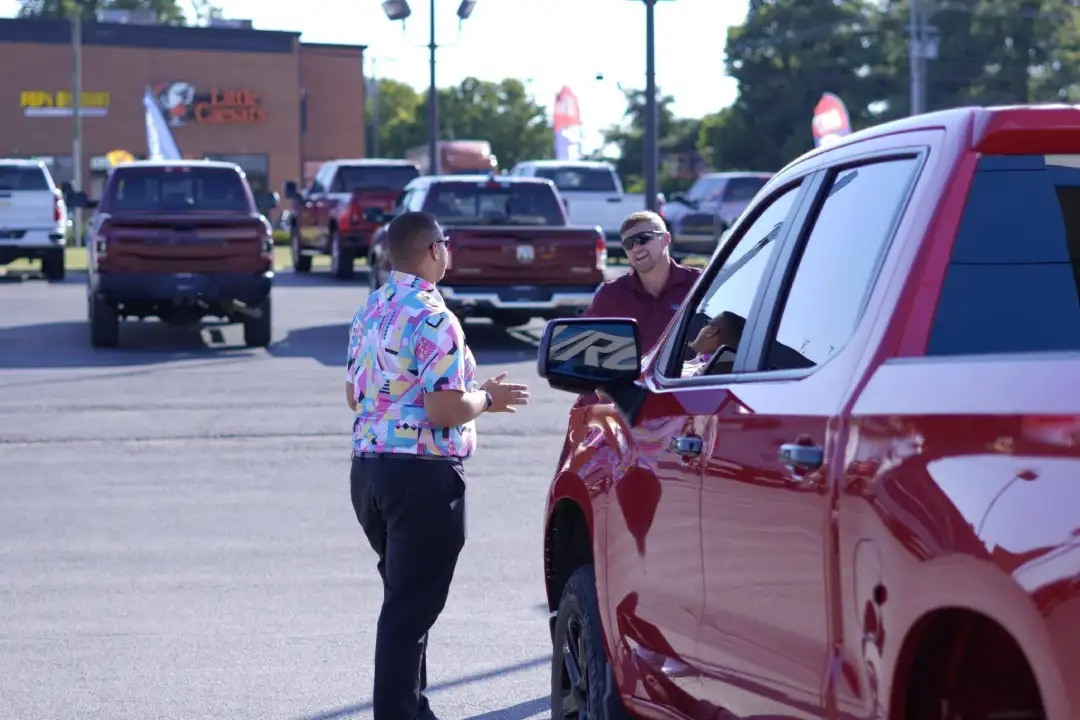
Dealer wholesale auctions are closed events where dealers buy and sell vehicles among themselves. Vehicles that dealers take in on trade and cannot profitably retail on their own lots go to auction. The vehicles sell to other dealers at wholesale prices, which are significantly lower than retail. These auction prices are tracked in real time and dealers use tools like Manheim Market Report and Black Book to see what specific vehicles are actually selling for at auction in the current week.
Why this sets the dealer’s floor
If a dealer offers you more than the vehicle would bring at auction and then cannot sell it on the lot, they lose money on the deal. No dealer makes offers above the auction floor consistently and stays in business. This is not dealers being dishonest. It is the economic reality that determines the minimum any dealer can pay for any vehicle. Understanding this does not mean you cannot negotiate a better number. It means you understand the constraint the dealer is working within.
What do car dealers use to determine trade-in value?
Dealers use a combination of wholesale auction market data tools like Manheim Market Report and Black Book, consumer-facing guides like KBB and JD Power for context, and their own real-time knowledge of what similar vehicles are selling for in the local market. The auction data is the most important input because it reflects what the vehicle would actually bring if the dealer had to move it wholesale.
Why do dealers look at auction prices for trade-ins?
The auction price is the dealer’s exit option. If they take in your trade and cannot sell it at a retail profit, they send it to auction. Their offer has to leave enough margin to cover reconditioning, holding costs, and still be competitive on the lot. The auction floor price is where that math begins.
What Moves a Vehicle’s Auction Value Up or Down
Auction prices are not fixed. They move based on the same factors that affect any market: supply, demand, condition, and timing. Every one of these factors shows up in your trade-in offer.
Mileage and age relative to market demand
A 2021 Silverado LT with 48,000 miles sells for more at auction than the same truck with 92,000 miles. This is not arbitrary. Retail buyers have a preference for lower mileage and are willing to pay more for it, so dealers who buy at auction pay more for lower-mileage examples. The mileage bands that create value jumps at auction are roughly 30,000, 60,000, and 100,000 miles. Crossing one of those thresholds can affect the auction value, and therefore your trade-in offer, by a meaningful amount.
Condition and reconditioning cost
At auction, vehicles are graded on condition. Dealers bidding on a vehicle factor in what it will cost to recondition it to retail standard. A vehicle with dents, worn tires, a cracked windshield, or deferred maintenance will sell for less at auction because the buyer is pricing in those repair costs. Your dealer is doing the same math when they walk your vehicle. Every visible repair item is a deduction from the auction-level offer, not from some imaginary higher number.
Regional demand and time of year
A four-wheel drive pickup in Mason County, KY is in higher demand than the same truck in Miami. A convertible in Kentucky in November is worth less at auction than that same car in April. Auction prices reflect regional supply and demand in real time. Dealers in this market know that 4WD trucks and capable SUVs move well locally, which means they can afford to bid more for them at auction and offer more on trade-ins. Bringing in a vehicle that the local market wants produces a better offer than bringing in one with limited local demand.
Why are car trade-in values so low?
Trade-in values are set against wholesale auction prices, not retail prices. The gap between what a dealer pays for a vehicle and what they sell it for covers reconditioning, lot costs, staff, and profit margin. That spread is why trade-in offers are lower than what you see the same type of vehicle listed for on the dealer’s retail lot. The offer is not arbitrary. It reflects the dealer’s actual cost structure and the wholesale market price for your vehicle.
Does the time of year affect my trade-in value?
Yes. Auction demand follows seasonal patterns. Convertibles and sports cars bring more in spring. Four-wheel drive trucks and SUVs hold strong value year-round in markets like ours but can peak in fall when buyers are thinking about winter. A vehicle that is in strong seasonal demand at the time you trade it in will typically fetch a better offer than the same vehicle traded in during its off-season.
What Tools Dealers Actually Use to Value Your Trade-In
Dealers use a specific set of data tools to price trade-ins. Understanding what each one does gives you the context to evaluate the offer you receive.
Manheim Market Report: the auction data source
Manheim is the largest wholesale vehicle auction network in the country. The Manheim Market Report gives dealers real-time data on what specific vehicles are actually selling for at auction by region, condition grade, and mileage. This is the most used and most trusted tool in dealer appraisals because it reflects actual transaction prices from the current week, not estimated values from a static guide.
Black Book and JD Power: wholesale price guides
Black Book and JD Power publish wholesale valuation guides that dealers use as a cross-reference. These tools pull from auction transaction data and adjust for regional market conditions. They provide a consistent baseline that makes it easier to value vehicles quickly across different makes and model years.
KBB is a consumer tool, not a dealer tool
Kelley Blue Book is the most recognized name in vehicle valuation for consumers, and it is useful for understanding the retail market context. However, KBB trade-in values are typically higher than what the wholesale auction market supports for the same vehicle. Dealers do reference KBB, but the tool they are actually making offers from is the wholesale auction data, not KBB. When a buyer walks in citing their KBB trade-in value as the floor, they are citing a retail-adjacent number against a wholesale market reality.
What do car dealers use for trade-in value?
Dealers primarily use wholesale auction data tools like Manheim Market Report and Black Book to set trade-in offers. These reflect what the vehicle would actually sell for in the wholesale market. KBB is a useful consumer reference but reflects retail context rather than the wholesale prices dealers are working from.
Is KBB trade-in value accurate?
KBB trade-in values provide a reasonable consumer reference point but are typically higher than what the wholesale auction market supports. A dealer making an offer is working from auction data, not KBB. The KBB number is useful for understanding the range, but the actual offer will be based on what the vehicle would realistically bring in the current wholesale market.
What Car Dealers Actually Do with Your Trade-In
Most sellers do not think about what happens to their vehicle after they hand over the keys. Understanding the lifecycle helps explain the offer math.
Option 1: retail it on the lot
If the vehicle fits the dealer’s used inventory needs and the condition supports a competitive retail price after reconditioning, the dealer will clean it up and put it on the lot. This is the best outcome for the dealer’s margin. It is also why dealers offer more for vehicles they know they can sell locally. Caleb McFarland personally evaluates every vehicle that comes in before it goes on the McFarland lot. Not every trade-in makes the cut.
Option 2: send it to auction
Vehicles that do not fit the dealer’s lot, have too much mileage, need significant repairs, or are not in demand locally go to the wholesale auction. The dealer sells them to other dealers and recovers the wholesale price. This is why the auction floor price is so critical. It represents the guaranteed exit option, and no dealer can sustainably offer more than their guaranteed exit.
Why dealers like trade-ins
A trade-in allows a dealer to source used inventory at a predictable cost without paying auction fees, transport, and buyer’s premium. It also simplifies the transaction for the customer, which makes deals close faster. Dealers actively want to take in trades because it is a more efficient way to stock used inventory than buying everything at auction.
What do car dealers do with old trade-ins?
Dealers either retail the trade-in on their own lot after reconditioning or send it to the wholesale auction if it does not fit their inventory needs. Higher-mileage vehicles, those needing significant repairs, or models with weak local demand typically go to auction. Clean, lower-mileage vehicles in strong local demand get reconditioned and retailed.
Why do car dealers like trade-ins?
Trade-ins give dealers a direct source of used inventory without auction fees, transportation costs, and buyer’s premiums. They also speed up the sales transaction because the customer handles their current vehicle and new purchase in one visit. For dealers who stock used vehicles, trade-ins are an efficient and cost-effective way to acquire inventory.
What You Can Do to Improve Your Trade-In Offer
Knowing how the auction market drives trade-in values points directly to what sellers can do to improve their number. The leverage is in reducing the reconditioning estimate and providing confidence in the vehicle’s condition.
Service history is worth real money
A vehicle with documented service records allows the appraiser to assign a condition grade with confidence. An appraiser looking at a vehicle with no service records has to assume the worst about maintenance and build that uncertainty into a lower offer. Vehicles serviced at McFarland have their full history on file. When those vehicles come in for appraisal, we already know the maintenance history. That documented certainty translates directly into a stronger offer because the reconditioning risk is lower.
Clean the vehicle before the appraisal
A clean vehicle does two things: it improves the condition grade at the appraiser’s first impression, and it makes it easier to evaluate the actual condition of the paint, interior, and mechanical surfaces. A dirty vehicle forces the appraiser to estimate what might be underneath. A clean vehicle is assessed on actual condition. The difference can be modest, but it is real.
Clear warning lights before you come in
A check engine light or warning indicator on the dash lowers the condition grade and signals potential repair costs. If you know what the light is for and it is a minor issue, clearing it before the appraisal is worth doing. An appraiser who sees a clean dash can grade the vehicle on its actual condition. Our trade-in appraisal guide covers every factor the appraiser evaluates and what you can do about each one.
How can I get more money for my trade-in?
The most reliable ways to improve a trade-in offer are: bring documented service records that confirm consistent maintenance, clean the vehicle thoroughly before the appraisal, clear any warning lights if the underlying issue is minor, and trade in at a time when the vehicle type is in strong seasonal demand. None of these guarantee a higher offer, but each one reduces the appraiser’s estimate of reconditioning cost or uncertainty, which directly affects the number.
Does having service records help trade-in value?
Yes, materially. Service records remove uncertainty from the appraisal. An appraiser who can verify that a vehicle has been maintained on schedule assigns a higher condition grade than one looking at a vehicle with no history. That condition grade directly affects the auction comparables the appraiser is using. Vehicles serviced at McFarland have their full history on file, which creates a documented advantage at appraisal time.
How McFarland Approaches the Trade-In Appraisal
McFarland Chevrolet has been buying vehicles at auction and appraising trade-ins for four generations. The process is straightforward because we have the market knowledge to make a real offer without games.
The appraisal takes 15 to 20 minutes
The appraiser does a complete walk-around, checks the interior and mechanical condition, starts the vehicle, and pulls current wholesale market data. The offer that comes out of that process is the real offer. There is no lowball opener designed to be negotiated up once you are inside sitting with a salesperson. Caleb McFarland puts the standard plainly: “We’re into protecting the customer the best we can.”
We know the local market from both sides
Because we buy at auction and take in trades, we have a real-time view of what vehicles are worth in this market from both the wholesale and retail sides. That knowledge benefits the sellers we work with because we do not have to build in as much uncertainty as a dealer with less auction experience. When we know a 2021 Silverado LT is moving well locally, we can make a stronger offer on that vehicle than a dealer who is uncertain about the local market for it.
How does McFarland determine trade-in value?
McFarland uses current wholesale auction market data alongside a physical appraisal of the vehicle’s condition. The appraiser does a complete walk-around, interior and mechanical check, and pulls live market data before naming a number. The offer reflects the vehicle’s actual condition and what the wholesale market currently supports for that year, make, and mileage.
Ready for Your Next Step?
If you want to know what your vehicle is worth in the current market, bring it in. The appraisal is free, takes 15 to 20 minutes, and the number we give you is the real number. Call us at (606) 564-6181.
Also helpful:
What dealers look for when appraising your trade-in
How to get top dollar for your trade-in
Trade-in vs private sale: which gets you more money
Contact McFarland Chevrolet
0 comment(s) so far on How Car Dealers Value Trade-Ins: The Auction Perspective