

Chevy Winter Service Checklist for Safer Driving
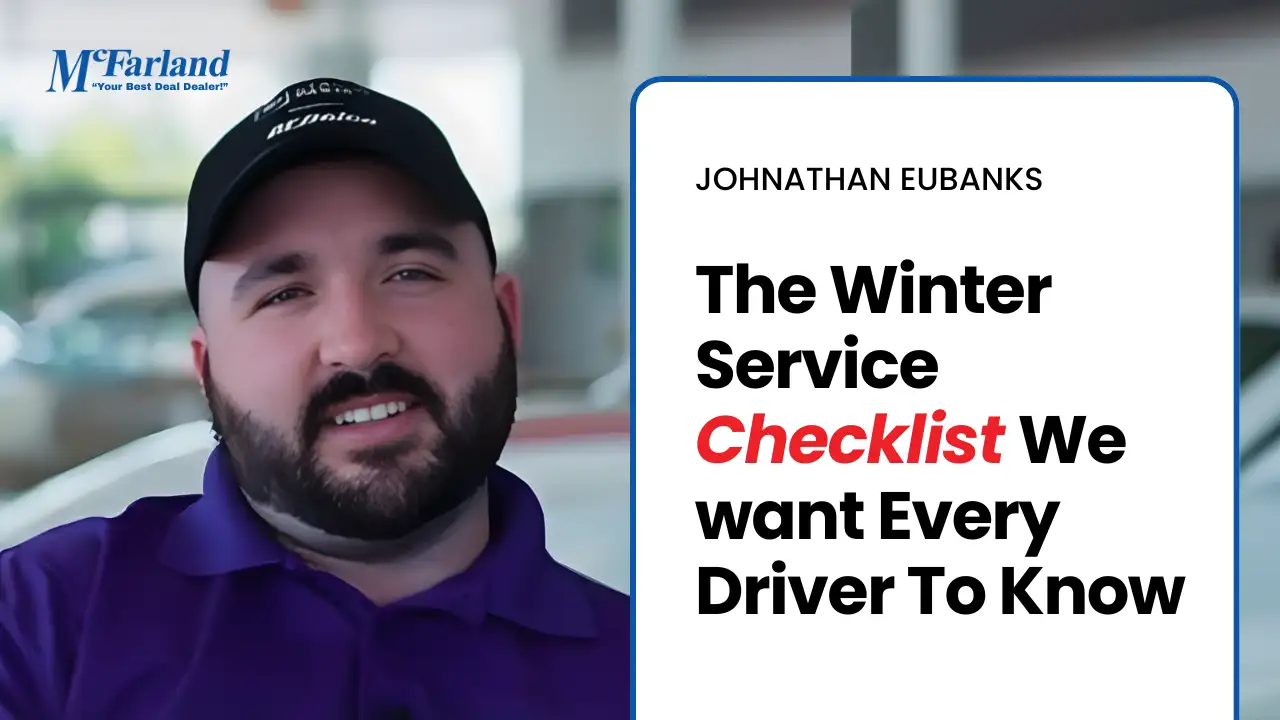
Winter has a way of exposing everything you’ve ignored on your vehicle. McFarland Chevrolet service advisor Johnathan Eubanks lays out a simple checklist to prevent breakdowns and white-knuckle drives when temperatures drop. He emphasizes testing coolant and antifreeze for true subzero protection, inspecting brakes, tires, and wiper blades, and prioritizing brake service and brake fluid before damage spreads. He also explains how McFarland’s service differs from a quick oil-change shop: the team follows your owner’s manual and recommends what your specific vehicle really needs GM and non-GM alike. For families, farmers, and weekend adventurers who rely on their vehicles in harsh weather, these proactive steps protect both safety and budget all winter long
Key Points

Test coolant and antifreeze for real cold.
Don’t assume last year’s mix still protects; verify it’s rated for negative temperatures.


Inspect brakes, tires, and wiper blades before the freeze.
Stopping and visibility are non-negotiable on slick winter roads.

Follow the owner’s manual not a one-size-fits-all ticket.
McFarland recommends maintenance by your manual for all makes and models.

Service brakes and brake fluid early to save rotors.
Waiting too long turns a simple job into an expensive repair.

Proactive winter service protects work, family, and weekend plans.
Dependable vehicles start with preventive checks, not luck.
“In the wintertime we definitely want to check the coolant and antifreeze… We also want to check your brakes and tires and wiper blades to make sure that you’re safe on the road.”
Why Winter Exposes Small Problems Fast
Cold weather shrinks rubber, thickens fluids, and turns tiny issues into big ones. That’s why Johnathan Eubanks coaches drivers to prepare before the first hard freeze. His winter checklist focuses on the parts of your vehicle that guard against the two biggest hazards of the season: losing control and losing visibility. If you get those right, winter driving becomes manageable even predictable.
Step 1 — Test Coolant & Antifreeze for Real Cold
Coolant “good enough” last spring can fail when the thermometer dives. Johnathan’s rule is simple: test, don’t guess. Confirm that your coolant/antifreeze mix is still rated for negative temperatures; top up or correct the mixture if it isn’t. A quick check now protects the engine, heater performance, and your wallet when the first arctic blast hits.
Step 2 — Brakes & Brake Fluid Before the First Freeze
Brake health is the most overlooked winter item. Johnathan sees drivers wait until grinding starts and by then, rotors often need replacement. Service pads early and evaluate brake fluid for moisture and age; fresh fluid preserves pedal feel and protects components in the long run. Addressing brakes before the roads get slick is the difference between confident stops and close calls.
Step 3 — Tires & Wiper Blades You Can Trust
Traction and visibility decide whether a winter trip feels routine or risky. Inspect tire tread depth and age, rotate if due, and verify pressures (they drop as temperatures fall). Replace tired wiper blades so slush and salt don’t smear your view. Paired with a verified coolant system and healthy brakes, these upgrades turn cold-weather commutes, farm routes, and weekend towing into business as usual.
What Makes McFarland’s Service Different
Plenty of shops can change oil. Johnathan’s team starts with your owner’s manual and recommends maintenance by the book for GM and non-GM vehicles. Instead of rushing you in and out, advisors explain what’s due now, what can wait, and why. That clarity keeps your vehicle on the road and your budget under control especially through winter, when being stranded isn’t an option.
Quick Prep List for Families, Farmers & Weekend Warriors
- Coolant/antifreeze test for subzero protection
- Brake pads & brake fluid inspection/service
- Tire tread, pressure, and rotation check
- New wiper blades and topped-off washer fluid
- Battery health test and terminal clean-up
- Owner’s-manual review to catch mileage/time-based items (transmission, differential, etc.)
FAQs
How often should I test coolant and antifreeze in winter?
Short answer :
At least once before freezing temps arrive or anytime you’ve added water or had cooling work done. Verify a negative-degree rating.
Long answer :
Cold snaps punish weak mixtures. Johnathan’s guidance is to test, not assume especially if you topped off with water over summer. A quick check confirms freeze protection and corrosion inhibitors are doing their job. If the reading isn’t adequate, we’ll correct the mix and inspect for leaks, thermostat issues, or cap problems that could reduce performance when you need cabin heat most.
What are the warning signs my brakes won’t handle winter?
Short answer :
Grinding, pulsing, longer stops, or a soft pedal. Service pads early and evaluate brake fluid before slick roads arrive.
Long answer :
Waiting until noises appear is costly pads can cut into rotors. Johnathan emphasizes early service to save rotors and restore safe stopping distances. We also test brake fluid for moisture/boiling-point loss; replacing degraded fluid protects valves, calipers, and pedal feel in freezing temps. A pre-winter inspection is the best way to prevent surprises.
Do you service non-GM vehicles the same way?
Short answer :
Yes. McFarland follows the owner’s manual for each vehicle GM and non-GM so recommendations fit your car.
Long answer :
Johnathan’s team isn’t a one-size-fits-all shop. We review your specific maintenance schedule and inspect accordingly, then explain what’s due now versus what can wait. That OEM-manual approach keeps costs logical and avoids both over- and under-servicing vital when winter weather demands reliability.
Are wiper blades really that important for winter?
Short answer :
Yes. Old blades smear salt and slush, killing visibility. Replace them before the first storm.
Long answer :
You can’t avoid what you can’t see. Johnathan groups wiper blades with brakes and tires in his winter essentials. Fresh rubber clears brine and grit cleanly, reduces glare from oncoming lights, and prevents the “frozen streak” effect that appears in subfreezing temps. Pair new blades with winter-grade washer fluid to keep the windshield clear at highway speeds.
Why service brakes and brake fluid before winter instead of after?
Short answer :
Because waiting turns minor wear into rotor damage and lengthens stops on slick roads. Fresh fluid also protects components.
Long answer :
Cold, moisture, and salt accelerate wear. Johnathan sees many drivers delay service until grind or pulsation appears; by then, you’re often replacing rotors too. Servicing pads earlier preserves hardware and confidence. Changing old, moisture-laden fluid raises boiling point and fights internal corrosion key for consistent winter braking.
Contact Us
Ready to match a Silverado to your real life? Talk with Johnathan Eubanks at McFarland Chevrolet for a quick needs assessment and test drive tailored to your budget, towing, and comfort goals. Call (606) 721-0406 or visit today.
0 comment(s) so far on Chevy Winter Service Checklist for Safer Driving