

Used Chevy Car FAQ with Kyron Humphrey
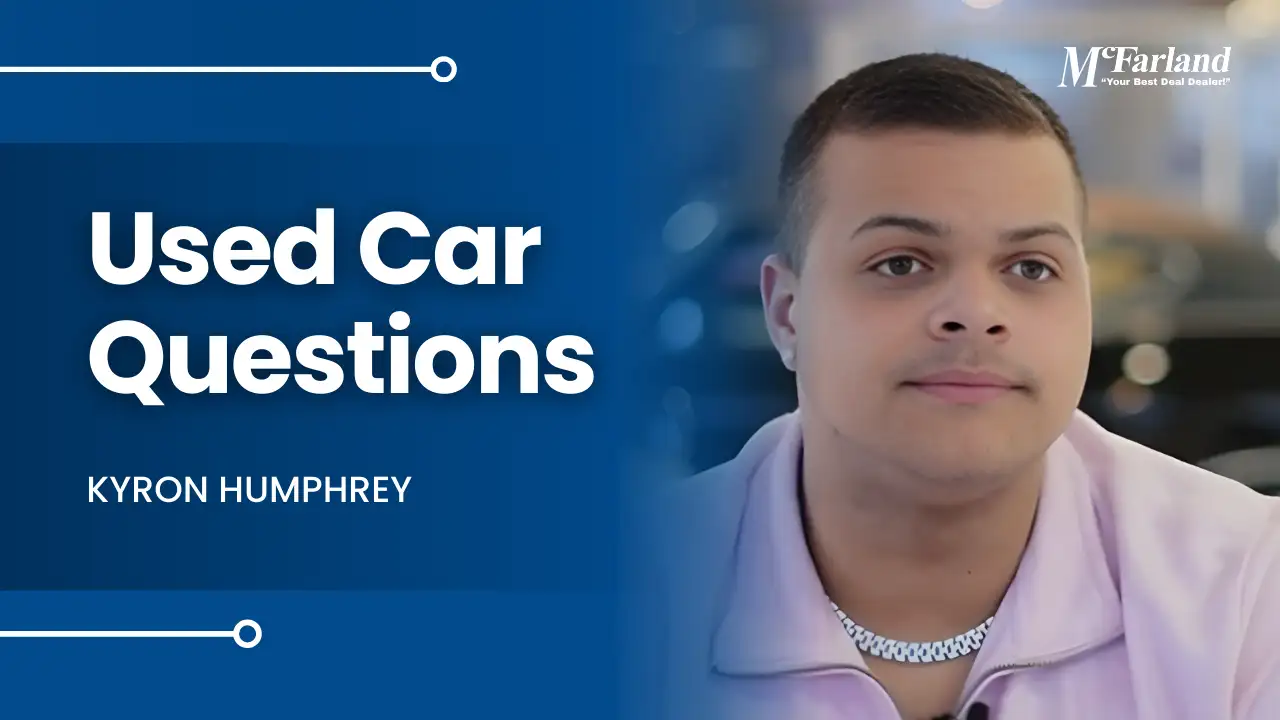
Buying used shouldn’t mean guessing. McFarland Chevrolet’s Kyron Humphrey lays out how families can reduce risk and shop with confidence. His process starts with three simple checks body condition, CarFax history, and service records because they reveal how a vehicle was treated. At McFarland, every unit goes through a 27-point inspection; cars that don’t pass are fixed or rejected, and eligible vehicles (under 60,000 miles and five model years) receive a complimentary 10-year/200,000-mile powertrain warranty covering the engine and transmission. Kyron can also walk you through inspection findings step-by-step so you understand any recommendations before you buy. Use this FAQ to cut through uncertainty and make a clear, confident decision on your next pre-owned vehicle.
What’s the biggest fear buyers have with used cars?
Short answer :
Most shoppers fear “buying someone else’s problem” hidden issues that become costly after the sale.
Long answer :
Kyron hears this every day: families prefer new because they’re worried a used car will bring unknown problems. That concern is valid, which is why his process focuses on verifying condition and history before you fall in love with a price. He starts with exterior clues, then corroborates them with CarFax entries and service records. At the dealership level, a 27-point inspection catches underlying issues so problem vehicles never make the lot. The goal is simple remove surprises and make sure the car is one you’d feel good owning for years.
How does McFarland help reduce that risk?
Short answer :
Every vehicle gets a 27-point inspection; units that don’t pass are repaired or rejected. The standard is “we won’t sell what we wouldn’t sell to our own family.”
Long answer :
Before a car hits the retail lot, McFarland Chevrolet puts it through a 27-point inspection that “checks all the boxes.” If the inspection surfaces anything significant, it’s corrected. If it can’t meet standard, it doesn’t go on sale. That filter directly addresses buyers’ top fear and sets expectations for condition. It’s part of a broader “family-first” culture Kyron describes: if the team wouldn’t sell the car to their own family, they won’t sell it to yours.
What vehicles qualify for the 10-year/200,000-mile warranty?
Short answer :
Used vehicles under 60,000 miles and five years old qualify for a complimentary 10-year/200,000-mile powertrain warranty. New vehicles also receive this benefit.
Long answer :
Eligibility is straightforward: if the vehicle is five model years or newer and shows under 60,000 miles, it qualifies for McFarland’s complimentary 10-year/200,000-mile powertrain coverage. That level of long-horizon protection is a key reason many buyers choose McFarland for used cars it aligns with family ownership cycles and protects the most expensive components over time. New vehicles from the store receive the same powertrain benefit, too.
What does the warranty cover?
Short answer :
Major powertrain components specifically the engine and transmission are covered under the complimentary warranty.
Long answer :
Kyron highlights the coverage where failures are costliest: engine and transmission. That’s why the powertrain warranty is such a confidence booster for used-car buyers planning to keep a vehicle for five or more years. It’s peace of mind on the components that could otherwise strain a family budget. Always review the written terms for your specific VIN to understand any maintenance requirements or deductibles.
Why check the body for repainting?
Short answer :
Uneven paint, overspray, or panel replacement can signal past accidents. These clues guide deeper questions and price expectations.
Long answer :
Kyron’s first pass is visual: walk the car in daylight and look for panel color shifts, wavy reflections, or overspray common signs of repainting after a collision. None of these are automatic deal breakers, but they should match what the CarFax reports. If the report shows a “minor” incident but the body tells a “major” story, ask for documentation, repair invoices, and who did the work. Aligning the body with the paper trail prevents unpleasant surprises later.
How reliable is CarFax?
Short answer :
It’s a strong tool, but Kyron pairs it with a physical inspection and service history to get the full picture.
Long answer :
CarFax helps verify accident entries (minor/moderate/severe), title status, and mileage progression. Kyron treats it as one leg of a three-part stool alongside body inspection and service records. Each source cross-checks the others: a clean CarFax plus mismatched paint invites more questions; a documented repair plus perfect bodywork is reassuring. Use the report to ask specific, informed questions rather than to decide in isolation.
Why are service records important?
Short answer :
Records show maintenance consistency and flag major engine/transmission work that deserves follow-up questions.
Long answer :
Service history is a reliability predictor. Kyron looks for regular oil changes and scheduled maintenance, then scans for major engine or transmission repairs. Big work isn’t always bad if a reputable shop handled it and warranty remains, it can be a plus. Thin or missing records increase uncertainty; factor that into price or keep shopping. Documentation helps you budget and supports better resale later.
What happens if a vehicle fails the inspection?
Short answer :
It doesn’t reach the lot. The vehicle is repaired to standard or rejected from retail sale.
Long answer :
The 27-point inspection is a gate, not a rubber stamp. If technicians uncover issues, the car is either corrected to standard or kept out of retail inventory. That’s how McFarland keeps problem units from reaching families and why buyers can shop the lot with more confidence. Ask your advisor to explain any items that were repaired before listing.
Can buyers see the inspection results?
Short answer :
Yes. Kyron can walk you through inspection findings and recommendations line-by-line.
Long answer :
Transparency is part of the process. If you’re considering a vehicle, ask Kyron to review the inspection checklist with you. He’ll explain what was checked, what (if anything) was corrected, and any maintenance that might be due soon. Seeing the data demystifies the purchase and helps you plan your first year of ownership with eyes open.
How do I start the buying process confidently?
Short answer :
Connect with Kyron to apply the three checks body, CarFax, service records and review the inspection together before test-driving finalists.
Long answer:
Begin with a quick conversation about budget, family needs, and must-have features. Then ask Kyron to walk you through the 27-point inspection, the CarFax, and available service records on a few finalists. Drive them back-to-back so differences stand out. This process filters the guesswork and ensures you’re comparing vehicles on facts, not just monthly payment or paint color.
Conclusion
Used-car confidence comes from process, not luck. Kyron’s three checks body, CarFax, and service history paired with McFarland’s 27-point inspection and long-term powertrain warranty create a clear path to a smarter purchase for families.
Contact Us
Ready to match a Silverado to your real life? Talk with Kyron Humphrey at McFarland Chevrolet for a quick needs assessment and test drive tailored to your budget, towing, and comfort goals. Call (606) 721-0406 or visit today.
0 comment(s) so far on Used Chevy Car FAQ with Kyron Humphrey