

The 3 Checks Before Buying a Used Chevy Car
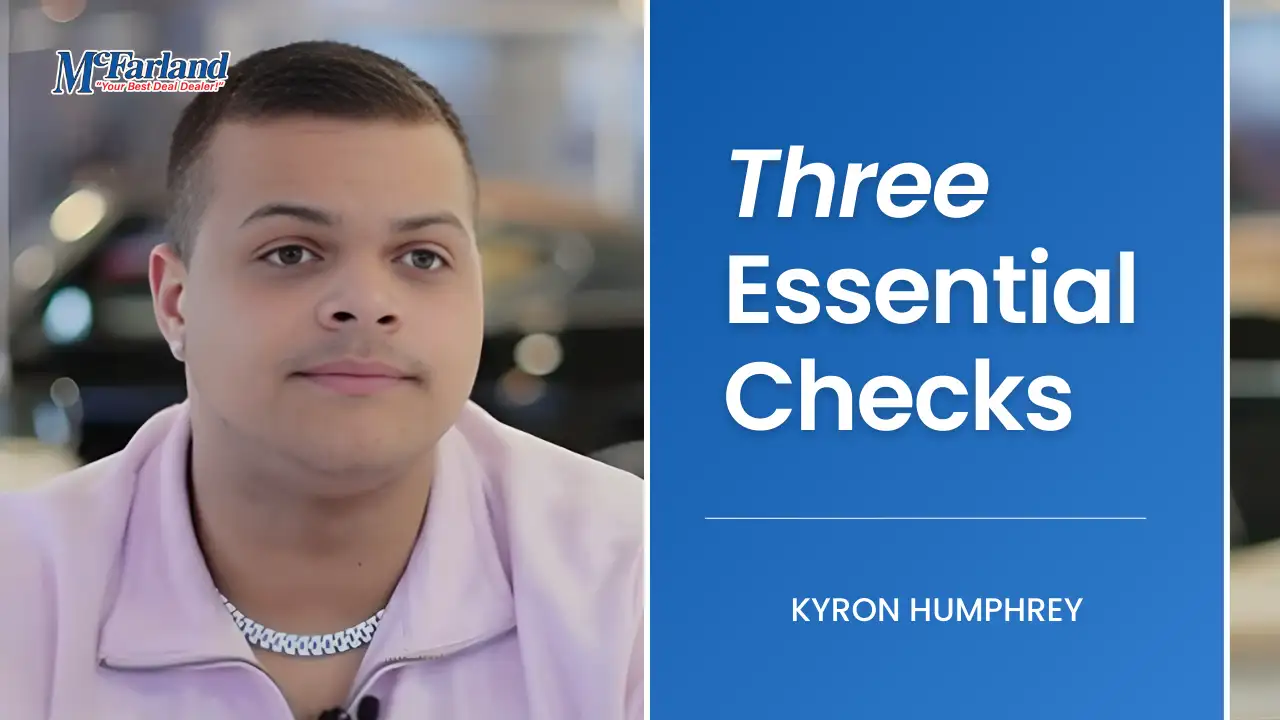
Buying a used car can feel overwhelming especially for families who don’t want to inherit someone else’s problems. McFarland Chevrolet’s Kyron Humphrey simplifies the process to three essential checks that reveal how a vehicle has been cared for: (1) examine the body for repainting or damage, (2) review the CarFax for accident history, and (3) verify service records for maintenance and major repairs. At McFarland, every used vehicle goes through a disciplined inspection and documentation review so surprises don’t show up after you take the keys. When you pair these checks with a transparent walkthrough from a trusted advisor, you cut through uncertainty, protect your budget, and choose a pre-owned vehicle with confidence not guesswork.
Key Points

Body condition tells the story of past damage.
Walk panels in good light; watch for mismatched paint, overspray, ripples, and uneven gaps clues to prior repairs.


CarFax confirms accident history and reported issues.
Use it to verify title status, mileage consistency, and incident severity so you can compare cars on facts.

Service history shows long-term care and red flags.
Consistent maintenance is a predictor of reliability; gaps or major repairs require follow-up questions.

These checks protect buyers from hidden problems.
A simple, repeatable process reduces risk and keeps family budgets safe for the next 3–5 years.

McFarland Chevrolet uses these standards on every used unit.
Kyron’s team inspects, documents, and rejects units that don’t meet the bar so you don’t buy a problem.
“Don’t buy a used car until you check these three things.” — Kyron, McFarland Chevrolet
Start with Your Biggest Fear—and Solve It
Most Family Drivers share the same worry: What if I’m buying someone else’s problem? Kyron Humphrey tackles that fear with a simple, repeatable process that anyone can use on the lot or in a driveway. Before you fall in love with a monthly payment or the color, run three checks that reveal how the vehicle has actually been treated. These steps don’t require special tools just careful eyes, a verified history report, and a willingness to read the service trail.
Check #1 — Body Condition Tells the Story
The exterior is your first truth-teller. Sight down each panel in daylight. Look for color shifts from panel to panel, orange-peel texture changes, overspray along rubber seals, and uneven gaps around doors or the hood. Small touch-ups aren’t automatically bad, but they should match what the paperwork says. If the CarFax shows a “minor” incident, the body should reflect minor work not structural repair. Ask who did the repair, what parts were used, and whether there’s any remaining warranty on paint or collision work. A clean body and honest story save you from chasing rattles, wind noise, or premature rust down the road.
Check #2 — Read the CarFax Like a Pro
Pull the CarFax (or similar report) and scan five items: ownership history, title status, accident entries and severity, mileage progression, and auction/transfer patterns. A steady mileage climb suggests a normal life; big jumps or resets are red flags. Title issues (salvage, flood, buyback) require careful consideration. Accident entries should align with what you saw outside. Finally, repeated auctions in a short period can indicate a hard-to-place car. Used properly, CarFax isn’t a scare tactic it’s a filter that keeps you focused on the best candidates.
Check #3 — Verify Service and Repair History
Service records are your reliability predictor. Look for routine oil changes, fluid services, brake and tire documentation, and manufacturer maintenance items done on schedule. If you see major engine or transmission work, don’t panic ask who performed it, which parts were installed, and whether there’s warranty coverage. Good documentation shows a responsible previous owner and helps you budget accurately for the next 30,000–50,000 miles. When records are thin, factor that uncertainty into price or keep shopping.
Why McFarland’s Process Builds Confidence
Kyron’s standard is simple: if he wouldn’t sell it to his own family, it won’t make the lot. That means every unit gets a thorough inspection and a documentation review before it’s offered for sale. If an issue appears, it’s addressed; if it can’t meet the standard, it’s rejected. That diligence, layered on top of your three checks, gives The Family Driver a clear picture before signing so your next car is a step forward, not an expensive surprise.
FAQs
How do I spot signs of repainting or body work?
Short answer :
Look for mismatched paint tones, overspray on rubber/trim, wavy reflections (“ripples”), and uneven panel gaps. These often indicate prior repair.
Long answer :
View the car in natural light. Sight down each panel for subtle waves; compare the orange-peel texture from door to fender. Check door jambs, under-hood, and trunk seams for overspray. Gaps around doors and the hood should be consistent side-to-side. None of these are deal-breakers alone, but they should align with the vehicle history and price. When unsure, ask for a paint-meter reading or a pre-purchase look from a trusted body shop.
What should I look for on the CarFax?
Short answer :
Ownership count, title status, accident severity, steady mileage, and repeated auctions/transfers. Use these to compare similar cars.
Long answer :
Start with titles avoid salvage or flood unless you fully understand the implications. Scan accidents (minor/moderate/severe) and verify that what you saw outside matches the report. Confirm mileage rises predictably across entries. Frequent auctions in a short window can be a yellow flag. Strong reports include regular maintenance stamps. Use the report to ask smarter questions and negotiate from facts.
How important are service records, really?
Short answer :
They’re critical. Consistent maintenance predicts reliability; thin records increase risk and should influence price.
Long answer :
Service history shows how the car was treated and what you might face next. Look for routine items on schedule and note big-ticket repairs. Major engine/transmission work isn’t always bad if done by reputable shops with solid parts and some warranty, it can be a plus. Records also help resale because you can prove care. If records are missing, ask for shop invoices or consider a different vehicle.
Should I still get a pre-purchase inspection?
Short answer :
Yes. Even after your three checks, a third-party inspection adds a layer of protection and leverage.
Long answer :
A pre-purchase inspection confirms your observations and spots issues you can’t see undercarriage leaks, suspension wear, weak battery, or old tires. It’s inexpensive insurance, and the written report provides leverage to fix items or adjust price. If a seller refuses, that’s information too. Combine the inspection with your body, CarFax, and service reviews for a 360° picture.
What’s a reasonable next step after I narrow it down?
Short answer :
Drive two or three finalists back-to-back, review paperwork line by line, and confirm costs (taxes, fees, warranty) before signing.
Long answer :
Set up back-to-back test drives so differences are obvious. While driving, listen for wind noise, feel for pull under braking, and test all features AC, infotainment, driver aids. Ask your advisor to walk you through the inspection results and service records. Confirm the out-the-door price and any included coverage in writing. If anything feels rushed, slow down; a solid used-car buy rewards patience.
Contact Us
Ready to match a Silverado to your real life? Talk with Kyron Humphrey at McFarland Chevrolet for a quick needs assessment and test drive tailored to your budget, towing, and comfort goals. Call (606) 721-0406 or visit today.
0 comment(s) so far on The 3 Checks Before Buying a Used Chevy Car