

Silverado 2500HD Payload Capacity: Max Load by Configuration

Silverado 2500HD payload capacity is not a single number, even though it often gets quoted that way. The actual figure depends heavily on cab style, bed length, drivetrain, and even which specific equipment package a truck was built with. This guide breaks down how payload actually changes across the 2026 Silverado 2500HD lineup, so you can find the number that applies to the truck you are actually considering.
If you have seen different payload numbers for the same truck on different websites, this is exactly why. Configuration matters more than any single advertised maximum.
Below, we break down what actually determines payload, how it shifts across cab and bed choices, and why trim level alone does not tell the whole story.
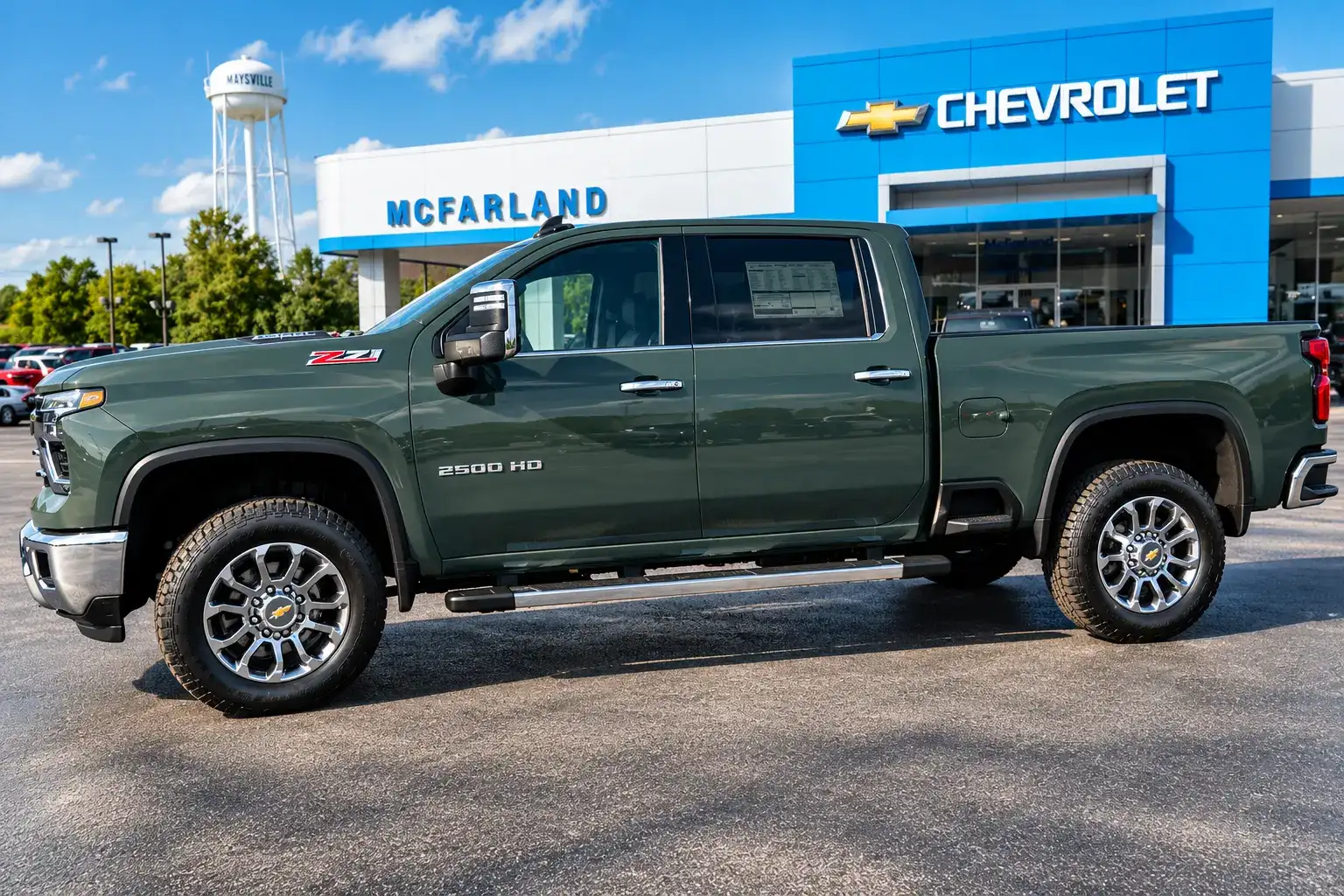
What Determines Payload on a 2500HD
Payload is the difference between a truck’s gross vehicle weight rating, the maximum total weight it is engineered to carry, and its actual curb weight as built. Every option, from cab size to trim level, adds weight to the truck itself, which reduces how much payload capacity is left over.
Curb weight on the 2026 Silverado 2500HD ranges from roughly 6,266 to 8,408 pounds depending on configuration, according to Chevrolet’s own published range. That is a meaningful spread, and it is the main reason payload figures vary so much across the line-up.
This is why two trucks that look nearly identical on a lot can carry noticeably different loads. A few hundred pounds of curb weight difference translates directly into a few hundred pounds of payload difference in the opposite direction.
Important note: A lighter, simpler configuration is not a downgrade. It often means more usable payload, since less of the truck’s weight rating is used up by the truck itself.
View this post on Instagram
Payload by Cab and Bed Configuration
Cab and bed choice affects payload more than almost anything else on the truck.
Suspension technology, not styling, is what actually determines how a truck handles repeated hits on rough terrain, so this is the section worth paying closest attention to if serious off-roading is part of your plan.
Regular Cab: The Payload Leader
The Regular Cab, Long Bed, 2WD configuration consistently tops the 2500HD payload chart, reaching approximately 4,081 pounds with the gas engine and the right wheel package. This is the lightest cab configuration Chevy offers on the 2500HD, which is exactly why it carries the most payload.
Regular Cab is a common choice for buyers who need maximum payload and do not need rear-seat space, like contractors running a dedicated work truck or farm operations hauling feed and equipment without carrying extra passengers.
Double Cab and Crew Cab Trade-offs
Stepping up to Double Cab or Crew Cab adds a rear seat and, in Crew Cab’s case, a full second row of doors, both of which add weight the truck has to carry before you load anything into the bed. Crew Cab Standard Bed configurations typically land in the 3,600 to 4,200 pound range depending on drivetrain and trim, while Long Bed Crew Cab configurations run similarly, generally within a couple hundred pounds either way.
For most buyers who need rear-seat space regularly, this trade-off is well worth it. The payload difference between cab styles is real, but it rarely rules out a Double Cab or Crew Cab for typical hauling needs.
Important note: 4WD generally reduces payload slightly compared to 2WD in the same cab and bed configuration, since the four-wheel-drive hardware itself adds weight to the truck.
How Gas vs Diesel Affects Payload
The Duramax diesel engine is heavier than the standard gas V8, and that weight comes directly out of available payload. A diesel-equipped truck in a given configuration will generally carry somewhat less payload than the same configuration with the gas engine.
This is worth weighing against the diesel’s towing and torque advantages, covered in detail on our Silverado 2500 gas versus diesel comparison. Payload and towing pull in different directions, and the diesel’s strengths lean more toward towing than maximum bed payload.
Neither engine choice is wrong. It comes down to whether your work leans more toward hauling heavy loads in the bed or pulling a heavy trailer behind the truck.
Pro tip: If your priority is maximum bed payload rather than maximum towing, the gas engine in a lighter cab configuration is often the stronger choice, not the diesel.
Why Trim and Equipment Matter as Much as Configuration
This is the part of the payload conversation that surprises a lot of shoppers. In several configurations, higher trims like Custom, LTZ, and High Country actually show higher payload ratings than WT or LT in the same cab and bed combination. This runs counter to the usual assumption that a more basic trim always means more capability.
The explanation comes down to which specific equipment and suspension packages a given build includes, not the trim badge itself. A higher trim ordered with a heavy-duty payload package can out-rate a base trim without one.
This is a genuinely useful thing to know before assuming a work-focused WT automatically beats a nicer trim on payload. The actual build sheet decides that, not the trim name alone.
Additional question: Does choosing a higher trim always reduce payload? No. Payload depends on the specific equipment and suspension package on that build, not how far up the trim ladder it sits alone. Compare actual build sheets rather than assuming trim level alone decides the number.
Payload vs Towing: Don’t Confuse the Two
Payload and towing are related but separate ratings. Payload covers everything carried in the cab and bed, including passengers, cargo, and any trailer tongue or pin weight. Towing covers what the truck can pull behind it. For the full breakdown of towing figures and trailering technology, see our Silverado 2500 towing and capability page.
Important note: A loaded trailer’s tongue weight counts against your payload rating, not only your towing rating. A truck near its payload limit has less room for tongue weight than the towing number alone suggests.
Finding Your Specific Truck’s Rating
Given how much payload varies by configuration, the only fully reliable number is the one on your specific truck’s door-jamb sticker. This lists the exact GVWR and payload rating for that particular build, accounting for every option that affects the number.
Published figures online, including the ranges in this guide, are a solid starting point for comparison shopping, but the sticker on the actual truck is always the final word.
2026 Silverado 2500HD Payload Quick Reference
Here is a summary of how payload shifts across common configurations.
| Configuration | WT / LT | Custom / LTZ / ZR2 / High Country |
|---|---|---|
| Regular Cab, Long Bed, 2WD (gas) | Up to approximately 4,081 lbs | Varies by equipment |
| Double Cab, Long Bed, 4WD | 3,671 lbs | 4,121 lbs (Custom) |
| Crew Cab, Standard Bed, 2WD | 3,640 lbs | 4,040 lbs (Custom) |
| Crew Cab, Standard Bed, 4WD | 3,625 lbs | 4,200 lbs |
| Crew Cab, Long Bed, 2WD | 3,690 lbs | 4,090 lbs (Custom) |
| Crew Cab, Long Bed, 4WD | 3,732 lbs | 4,132 lbs |
Find the Right Configuration for Your Work
Come see our current line-up of Silverado 2500HD trucks for work and contractor use in Maysville, and our team can help match the exact cab, bed, and drivetrain combination to what you actually haul.
Still deciding between gas and diesel? Read our gas vs diesel cost comparison. Check your trade-in value, or call us at (606) 564-6181 to talk through the right configuration for your needs.
0 comment(s) so far on Silverado 2500HD Payload Capacity: Max Load by Configuration