

High-Mileage Used SUVs: What to Look for Above 100K

High-mileage used SUVs scare off a lot of shoppers before they even take a look. A number like 110,000 or 140,000 miles can feel like a red flag, but for a well-built SUV with a clean history, it often only means the vehicle is settling into its prime years. This guide walks through what actually matters once an SUV crosses 100,000 miles, what to check before you buy, and why mileage alone rarely tells the whole story.
None of this is about talking you into a specific vehicle. It is about knowing what to check so you can shop with confidence instead of guessing.
This guide covers what mileage actually means, what to check on any high-mileage SUV, and how financing and dealer inspections change the picture compared to a private-party sale.
What Counts as High Mileage on a Used SUV
Most drivers put around 12,000 to 15,000 miles on a vehicle each year. Using that rule of thumb, an SUV with 100,000 miles could be anywhere from six to nine years old, which is still well within the working life of a modern vehicle.
High mileage is not one fixed number. An SUV driven mostly on the highway for regular errands and commuting tends to hold up differently than one with the same mileage from frequent short trips and stop-and-go city driving. How those miles were driven matters as much as the number itself.
This is why two SUVs with nearly identical odometer readings can be in very different condition. The number on the dash is a starting point for questions, not a verdict on its own.
Important note: There is no single mileage where an SUV stops being a safe buy. Maintenance history and current condition tell you more than the odometer alone.
View this post on Instagram
Why High-Mileage SUVs Can Still Be a Smart Buy
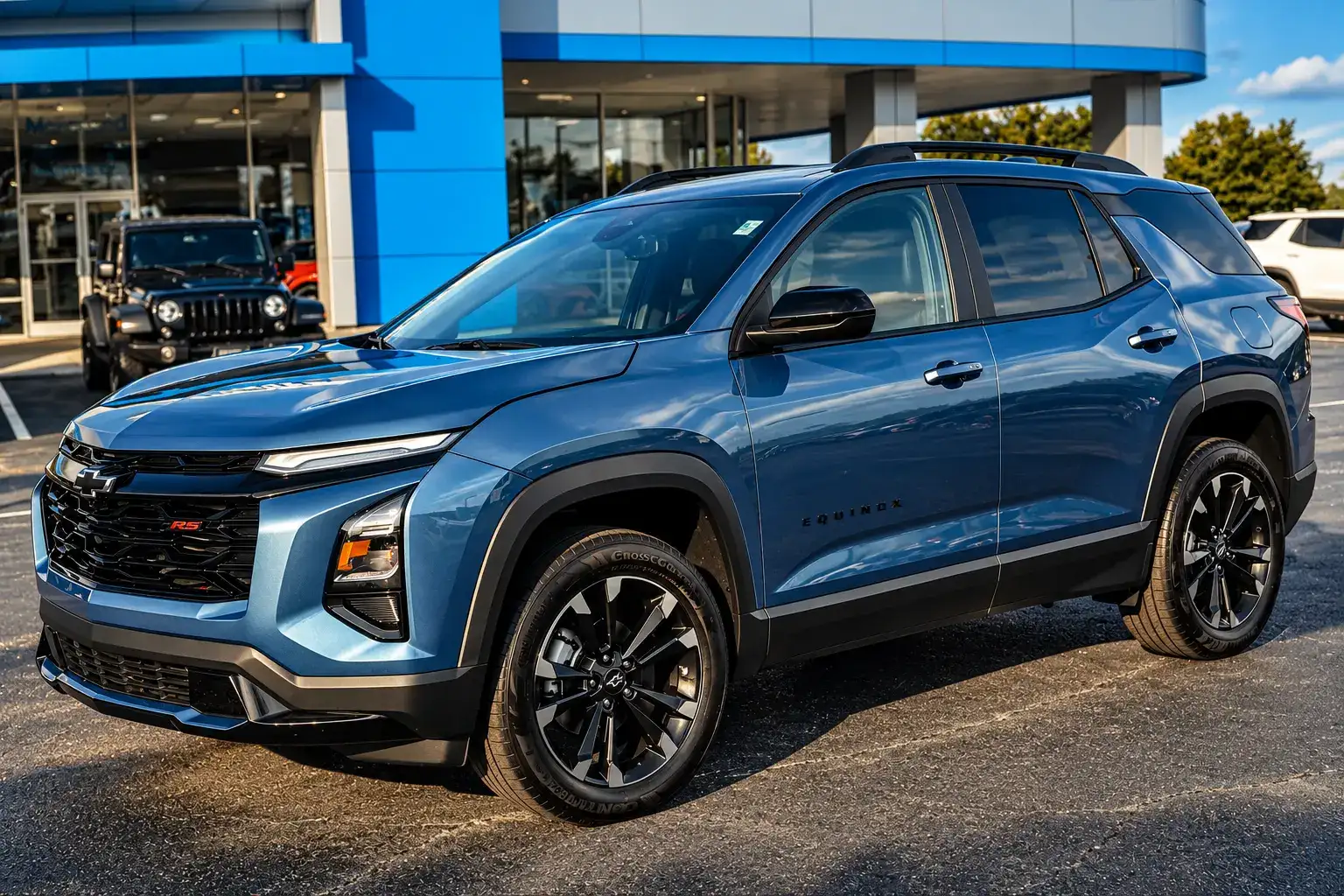
Modern SUVs are built to hold up well past the 100,000-mile mark with routine maintenance. Popular used models like the Equinox, Traverse, and Blazer regularly show up on trade-in with well over 100,000 miles of daily use behind them.
A high-mileage SUV also tends to come with a lower price tag, which can open the door to a newer model year, a higher trim, or more standard features than a buyer’s budget might otherwise allow.
For a lot of buyers, this trade-off makes more sense than stretching further for a lower-mileage vehicle with fewer features. It comes down to whether the documented history supports the mileage on the odometer.
Pro tip: Compare a high-mileage SUV in a higher trim against a low-mileage SUV in a base trim. The extra features and comfort are sometimes worth more day to day than a lower number on the odometer.
What to Check Before Buying a High-Mileage SUV
A little homework before you buy tells you far more than the mileage alone.
Maintenance Records and Service History
Ask for service records showing regular oil changes, transmission service, and any major repairs. An SUV with a documented history is easier to trust than one with no paperwork at all, no matter the mileage.
If a seller cannot produce any records, treat that as a real factor in your decision rather than a minor inconvenience to overlook.
Engine and Transmission Condition
Start the engine cold if possible. It should start clean and idle smoothly, without knocking, ticking, or unusual exhaust smoke. During a test drive, the transmission should shift without hard clunks, slipping, or delayed engagement.
AWD System Health, If Equipped
On an SUV with all-wheel drive, ask whether the AWD system has ever needed repair. Listen for unusual noise or vibration, and pay attention to whether the system engages smoothly on a test drive, particularly on a wet or gravel surface where a brief handling check is reasonably safe.
AWD systems require some maintenance beyond what a front-wheel-drive vehicle needs, so a documented history here matters as much as it does for the engine or transmission.
Unibody Condition and Tires
Most SUVs use unibody construction rather than a separate frame, so rust and corrosion show up differently than on a body-on-frame truck. Check subframe mounting points and the underside for heavy rust, and look at tire wear for signs of alignment or suspension issues.
This matters more in regions that use road salt during winter, since unibody structures can develop corrosion in different spots than a traditional truck frame.
Additional question: Should I get an independent inspection before buying a high-mileage SUV? Yes, especially from a private seller. An independent inspection or a dealer’s own multi-point inspection can catch issues that are not obvious on a test drive.
Financing a High-Mileage Used SUV
Some lenders place age or mileage caps on the vehicles they will finance, which can catch buyers off guard if they have not shopped for a loan on a high-mileage vehicle before. This varies significantly by lender, so it is worth asking early rather than assuming any high-mileage SUV will qualify for the same terms as a newer one.
Important note: Our finance team works with multiple lenders regularly, which gives us more flexibility on high-mileage financing than a single-bank relationship would. Ask us directly about your specific situation rather than assuming a high-mileage vehicle rules out financing altogether.
Why Buying High-Mileage Used From a Dealer Beats Private-Party
Private-party listings skip any dealer inspection entirely. Every used SUV at McFarland goes through a 21-point inspection and a 7-day prep turnaround before it goes on the lot, with GM-certified technicians handling the process. See our questions to ask at any dealership guide for more on what a dealership should be willing to tell you.
Important note: A documented condition history from a dealer inspection is something a private-party listing cannot offer. That matters even more on a high-mileage SUV, where knowing exactly what has been checked carries real weight.
What This Looks Like at McFarland
Used Equinox, Traverse, and Blazer models are some of the most requested SUVs on our lot, and mileage alone rarely rules any of them out. What matters more is documented history and current condition, which is exactly what our inspection process is built to confirm. See our guide on what adds value to a trade-in if you are also considering trading in your current vehicle.
High-Mileage SUV Inspection Checklist
Use this as a quick reference the next time you look at an SUV above 100,000 miles.
| Inspection Area | What to Look For |
|---|---|
| Maintenance records | Regular oil changes, transmission service, and fluid changes on file |
| Engine | Starts clean, idles smooth, no knocking, ticking, or unusual exhaust smoke |
| Transmission | Shifts smoothly with no hard clunks, slipping, or delayed engagement |
| AWD system (if equipped) | No unusual noise, vibration, or hesitation when AWD engages |
| Unibody and undercarriage | No heavy rust or scaling, especially around subframe mounting points |
| Tires and brakes | Even tread wear, no pulsing or grinding when braking |
| Vehicle history report | Confirms accident history, prior owners, and title status |
See Our Inspected Used SUVs in Person
Every used SUV on our lot has already passed our 21-point inspection, so you are not left guessing what is under the hood. Come see our current lineup in Maysville, and bring your questions.
Curious how a used AWD SUV holds up in winter? Read our guide to used AWD SUVs for winter driving. Check your trade-in value, or call us at (606) 564-6181 to talk through which used SUV fits your budget.
0 comment(s) so far on High-Mileage Used SUVs: What to Look for Above 100K