

Used Truck Buying Guide: Complete Walk-Through
A used truck buying guide is only useful if it actually prepares you for what happens at every step of the purchase, not just the test drive. At McFarland Chevrolet in Maysville, KY, we have been selling trucks to working families, farmers, and contractors since 1983. We also see trucks come in as trades and through auctions. We know what makes a used truck a good buy and what makes it someone else’s problem with a price tag on it. This guide covers the complete process: defining what you need, researching the right years and configurations, inspecting the vehicle, evaluating the seller, and closing the deal without surprises.
Step 1: Define What You Actually Need Before You Start Shopping
The most expensive used truck mistake is buying the wrong truck for your actual needs, not just buying a bad truck. Knowing what you need before you shop narrows the field and prevents impulse decisions on the lot.
Half-ton vs heavy-duty: start here
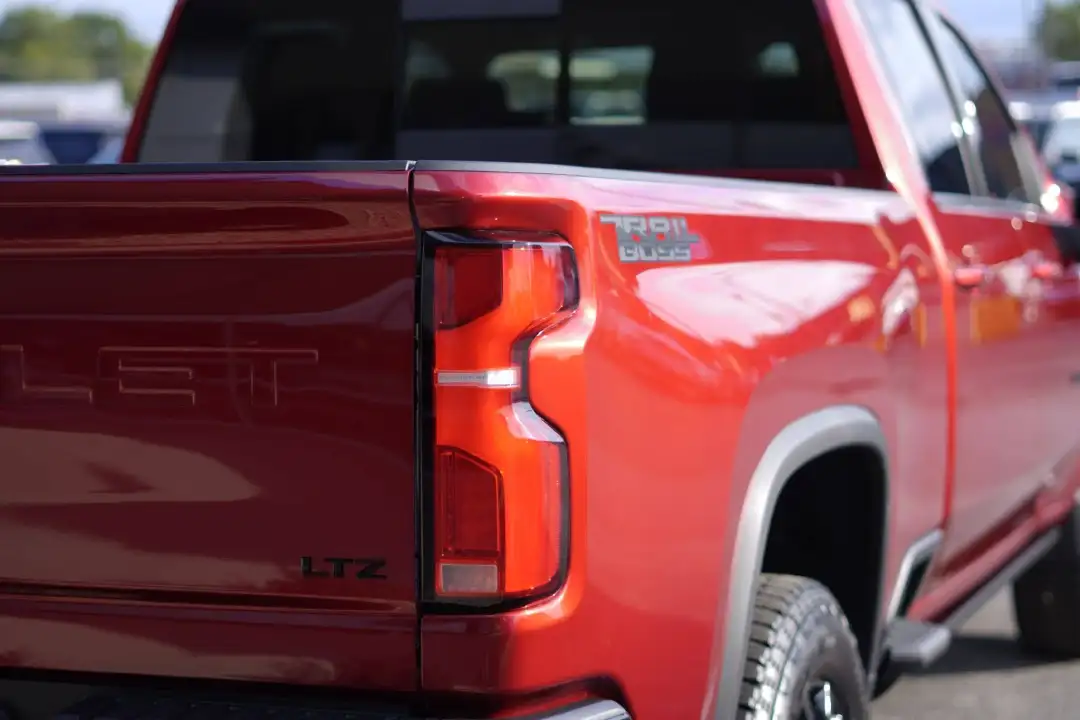
A Silverado 1500 is the right truck for most buyers: daily driving, occasional hauling, and towing up to 13,000 lbs. A Silverado 2500 HD is the right truck for buyers who regularly pull loads above 12,000 lbs, run gooseneck or fifth wheel setups, or load the bed heavily as a routine matter. Buying a 2500 HD when a 1500 would serve you costs more to purchase and more in fuel. Buying a 1500 and running it at its limit shortens its life. Define your heaviest regular load before anything else.
Engine, cab, and bed before trim level
Most buyers get excited about trim level and forget to think about powertrain and configuration. The engine determines your towing capacity and fuel costs for the life of the truck. The cab and bed configuration determines daily livability. Lock down the platform, engine, and configuration first. Trim is the last decision, not the first.
What should I look for when buying a used truck?
Start with your use case: what you tow, what you haul, how many miles you drive annually, and whether the truck will be a daily driver or a dedicated work vehicle. Then identify the platform, engine, and configuration that fit those needs. After that, evaluate specific trucks for mechanical condition, service history, and price. Most buyers reverse this order and end up with a truck that looks right but does not fit their actual needs.
How do I choose between a used half-ton and heavy-duty truck?
The clearest guide is your heaviest regular load, not your occasional maximum. A 1500 handles up to 13,300 lbs of towing when properly configured. A 2500 HD handles up to 18,500 lbs. If your regular loads are under 11,000 lbs and you do not run a gooseneck or fifth wheel, the 1500 is the right truck. Above that threshold, the 2500 HD is the right platform.
Step 2: Research Which Model Years Are Worth Buying
Not every year of any truck model is equally reliable. Redesign years introduce new problems. Some generations have documented issues that do not show up until 80,000 to 100,000 miles. Knowing which years to target and which to avoid saves you from buying someone else’s future repair bill.
Target the end of a proven generation
The final years before a redesign are typically the most refined versions of that platform. Engineers have had years to address early issues, and buyers have accumulated thousands of owner reports that identify where problems cluster. A 2022 Silverado 1500 benefits from everything Chevrolet learned about the T1XX platform since 2019. A 2019 Silverado 1500 is the first year of that generation with more first-year uncertainty built in.
Know the documented issues on your target generation
The 5.3L EcoTec3 engine on 2014 to 2021 Silverados has a documented AFM lifter failure issue that affects some high-mileage examples. Buyers shopping those years should specifically ask about lifter or engine noise. The 2.7L TurboMax on pre-2022 models had early oil consumption concerns that the 2022 TurboMax update addressed. Knowing these specifics before you look at a truck means you are asking the right questions instead of discovering problems after you own it. Our best used half-ton truck years guide covers this in detail by brand and generation.
What year used truck should I buy?
For a used Silverado 1500, the 2020 to 2022 T1XX generation is the strongest current target: mature platform, improved technology, and pre-inflation pricing in the used market. For buyers on a tighter budget, 2016 to 2018 K2XX models offer a proven platform at lower prices. Avoid the first model year of any redesign until the platform matures.
How many miles is too many on a used truck?
Mileage is a data point, not a verdict. A well-maintained Silverado with 130,000 miles and complete service records is a better buy than a 70,000-mile truck with no records and warning lights. The Silverado 5.3L V8 is documented at 200,000 to 300,000 miles of reliable service when properly maintained. Focus on the service history and condition, not the odometer alone.
Step 3: Pull the Vehicle History Report Before You Drive It
A vehicle history report is not optional on a used truck purchase. It should be the first thing you look at, before you schedule the test drive.
What a history report reveals
A Carfax or AutoCheck report on the VIN shows: accident history and severity, title status (clean, salvage, rebuilt, flood), number of previous owners, odometer readings at past inspections, and whether the vehicle was used commercially. Any of these can be a deal-stopper or a negotiating point. A salvage title alone typically disqualifies a truck from conventional financing. A flood title means you are buying a vehicle with corrosion in places you cannot see.
Service history is as important as accident history
A truck that has been serviced consistently at a certified shop has its history documented. When McFarland appraises a trade-in with full service records, the appraiser can give a stronger offer because the uncertainty about maintenance is removed. When you buy a used truck with no records, you are inheriting every oil change that may or may not have happened on schedule. That uncertainty belongs in the price you offer.
Should I buy a used truck with a salvage title?
Generally no. A salvage title means the vehicle was deemed a total loss at some point, typically from a serious accident or flood. Most lenders will not finance a salvage title vehicle. Insurance is more difficult and expensive. The prior damage may be structurally significant even if the truck looks repaired. The discount on a salvage title truck rarely compensates for the limitations it creates.
What is a good number of previous owners on a used truck?
One owner with consistent service records is ideal. Two owners is fine if both are documented. Multiple owners without records introduces more uncertainty about how the truck was treated at each stage. A one-owner truck that was lease-returned or fleet-maintained often represents some of the best value in the used market because the service history is complete.
Step 4: Inspect the Truck Before You Make Any Offer
The physical inspection is where you confirm whether the truck matches its history report and whether the condition justifies the asking price. Do it in daylight. Never inspect a used truck at night or under artificial light.
Exterior: rust, paint, and structural integrity
Walk every panel looking for paint mismatch, body filler, and misaligned gaps between panels. Look underneath for frame rust. Surface rust is normal on older trucks. Structural rust that is pitting or flaking on frame rails or suspension mounts is a deal-breaker. Check the bed floor under any liner for rust that has been hidden. Trucks that have spent winters in northern states can have significant underbody rust that is not visible from the outside.
Under the hood: fluids, leaks, and engine sounds
Pull the oil dipstick. Dark brown or black oil indicates overdue changes. Milky or foamy oil means coolant contamination, which is a serious engine issue. Check coolant color and level. Look at the oil fill cap for sludge. Start the engine and listen at idle: a persistent tick or knock at operating temperature warrants concern. A light valve train tick on a cold 5.3L V8 that clears when warm is more common and less serious. Any exhaust smoke on startup or under load needs investigation.
The test drive: transmission, brakes, and steering
The test drive should include: highway speed to check for vibration and wind noise, firm braking from moderate speed to check for pulling and brake feel, slow turns to check for clunking from suspension components, and engagement of four-wheel drive if equipped. Soft or spongy brakes, transmission hesitation, any grinding or clunking, and warning lights that come on are all items that belong in a negotiation or a walk-away decision.
Get a pre-purchase inspection on private sales
If you are buying from a private seller, have the truck inspected by a certified technician before you finalize the deal. The cost is modest and the inspection covers things a test drive cannot reveal: brake thickness, suspension component wear, undercarriage condition, and a full scan for stored fault codes. McFarland is ASE certified for all makes and will inspect any used truck you are considering buying privately. Our used truck inspection checklist covers all 15 points in detail.
What should I check when buying a used truck from a private seller?
Pull the vehicle history report first. Then inspect for rust, fluid condition, and body damage in daylight. Test drive to check transmission, brakes, and four-wheel drive engagement. Finally, have a certified technician do a pre-purchase inspection before you close the deal. Private sellers are not required to disclose known issues in most states, so the inspection is your only protection.
What warning lights should concern me on a used truck?
A check engine light, ABS warning, airbag light, or transmission warning are all serious. Do not accept a seller’s verbal explanation for any warning light. Have the codes read by a scan tool before you make an offer. A seller who clears codes before a showing can be identified: a scan tool check of OBD readiness monitors will show if codes were recently cleared.
Step 5: Evaluate Whether the Price Is Actually Fair
A truck can look like a good deal on price and still be a bad buy if the price does not account for its actual condition. Price evaluation is a separate step from condition evaluation.
Use multiple sources to establish market value
Kelley Blue Book, Edmunds, and real dealer listing prices all provide reference points. No single source is perfectly accurate for a specific market at a specific time. Look at what comparable trucks are actually listed for in your region, not just national averages. A clean 2021 Silverado LT with 65,000 miles in Mason County is priced differently than the same truck in a major metro area.
Factor in what the truck needs
If a truck needs tires, brakes, or any repair you identified in the inspection, those costs come off the top of what you offer. A dealer or private seller who prices a truck at market value but does not disclose that it needs $1,500 in tires and brakes is pricing above the fair deal. Get repair estimates before you negotiate and make the offer based on the truck’s condition, not just the asking price.
How do I negotiate the price of a used truck?
Come in with market data from at least three comparable listings, the results of your physical inspection, and repair estimates for anything the truck needs. Make an offer based on the truck’s actual condition relative to market comparables. At a dealer, ask for the inspection report and any reconditioning work that was done before the truck went on the lot. At McFarland, the offer we give on a trade-in is the real offer, not a starting point for games.
Is buying a used truck from a dealer safer than a private sale?
A reputable dealer inspects, reconditions, and stands behind what they sell. A private seller has no such obligation. The premium you pay at a dealer versus a private sale typically reflects the reconditioning work done and the risk the dealer absorbed to put the truck on their lot. At McFarland, Caleb McFarland personally vets every used vehicle before it goes on the lot. Not every trade that comes in makes it onto the lot.
Step 6: Get Financing Right Before You Sit Down to Sign
The deal you close on a used truck is determined in part before you arrive at the dealer, not just at the desk.
Know your credit and get pre-approved
Knowing your credit score before you walk onto a lot prevents the rate surprise at the desk. Getting pre-approved through your bank or credit union gives you a rate to compare against dealer financing. Dealer financing is sometimes better, sometimes not. Having your own financing approved means you are comparing actual numbers rather than accepting whatever rate is presented.
Total cost of ownership, not just the monthly payment
A lower purchase price on a higher-mileage truck that needs tires, brakes, and an oil change in the first six months is not necessarily a better deal than a slightly higher purchase price on a clean truck with recent service. Add insurance, expected maintenance, and fuel costs to your comparison. A truck that gets 16 mpg on a 30,000-mile annual drive costs significantly more to fuel per year than one that gets 20 mpg.
Should I finance a used truck through the dealer or my bank?
Compare both. Get pre-approved through your bank or credit union before you go to the dealer. At the desk, ask what the dealer financing rate is for the same term. If the dealer rate is better, use it. If your pre-approval is better, use that. Having both options prevents you from defaulting to the first rate offered.
How long should a used truck loan be?
The shorter the loan term, the less you pay in total interest. A 60-month loan costs significantly less in interest than a 72 or 84-month loan on the same amount. Longer terms lower the monthly payment but increase total cost. On a used truck, a loan term longer than 60 months also creates the risk of owing more than the truck is worth if it depreciates faster than you pay it down.
Step 7: Handle Your Trade-In or Sale Before You Buy
What you do with your current vehicle affects the total cost of the transaction, sometimes more than the purchase price of the truck you are buying.
The trade-in tax savings are real and often ignored
In Kentucky and most states, trading in a vehicle reduces the taxable purchase price of the new vehicle. On a $15,000 trade-in at a 6% sales tax rate, that saves $900 in taxes compared to selling privately and buying new without the offset. That savings closes part of the gap between what a dealer offers for a trade and what a private buyer might pay. Our trade-in vs private sale guide covers the full math.
Prepare the vehicle before the appraisal
The things that actually improve a trade-in offer are: a clean interior and exterior, no warning lights, documented service records, and accurate representation of condition. Spending $200 on a detail before a trade-in appraisal often returns more than the detail cost in offer improvement. A warning light that costs $80 to diagnose and clear may add more to the offer than the repair cost. Our trade-in preparation guide covers what to do and what not to bother with.
Should I sell my truck before buying a used one?
Not necessarily. Trading in at the same dealer means you save on sales tax and complete the transaction in one visit. The convenience and tax savings often offset the difference between trade-in value and private sale proceeds. If private sale would net you significantly more after accounting for tax savings and the time investment, sell privately first. If the difference is modest, the convenience of a trade-in is worth it for most buyers.
Step 8: What to Do in the First 90 Days After You Buy
The first 90 days of used truck ownership set the foundation for the truck’s service life under your ownership.
Fresh oil and filter regardless of the odometer
Even if the oil looks fine, change it when you take ownership. You do not know the last change interval with certainty, and starting with fresh oil and a new filter establishes your baseline. Check the transmission fluid, coolant, brake fluid, and power steering fluid at the same time.
Establish a service relationship
A used truck serviced at the same shop from the moment you buy it will have a documented history when it comes time to trade or sell. That documented history improves your appraisal and makes the truck easier to sell privately. McFarland services all makes and is ASE certified. Every oil change includes a tire rotation, all fluid checks, and a complimentary car wash. We are open Saturdays.
What maintenance should I do immediately after buying a used truck?
Change the oil and filter, check and top off all fluids, replace the air filter if it has not been recently changed, inspect the brake pads and tires, and have the cooling system inspected if you do not have records on the last service. These steps establish your baseline and identify anything the previous owner deferred.
Is it worth buying an extended warranty on a used truck?
It depends on the truck’s age, mileage, and your financial tolerance for a large unexpected repair. On a truck over 100,000 miles without warranty coverage, a mechanical breakdown protection plan can make sense for peace of mind. Read the coverage carefully: understand exactly what is and is not covered, what the deductible is, and whether the plan is transferable if you sell the truck.
Ready for Your Next Step?
If you want a straight conversation about what used trucks we have on the lot, what condition they are in, and what they are actually worth for your situation, call us. We would rather spend 20 minutes helping you find the right truck than have you drive home in the wrong one. Call us at (606) 564-6181.
Related guides:
Used truck inspection checklist: 15 things to check
Trade-in vs private sale: which gets you more money
What dealers look for when appraising your trade-in
Service your truck at McFarland
0 comment(s) so far on Used Truck Buying Guide: Complete Walk-Through